
Smarter Cervical Cancer Screening: Improving Outcomes While Reducing Costs
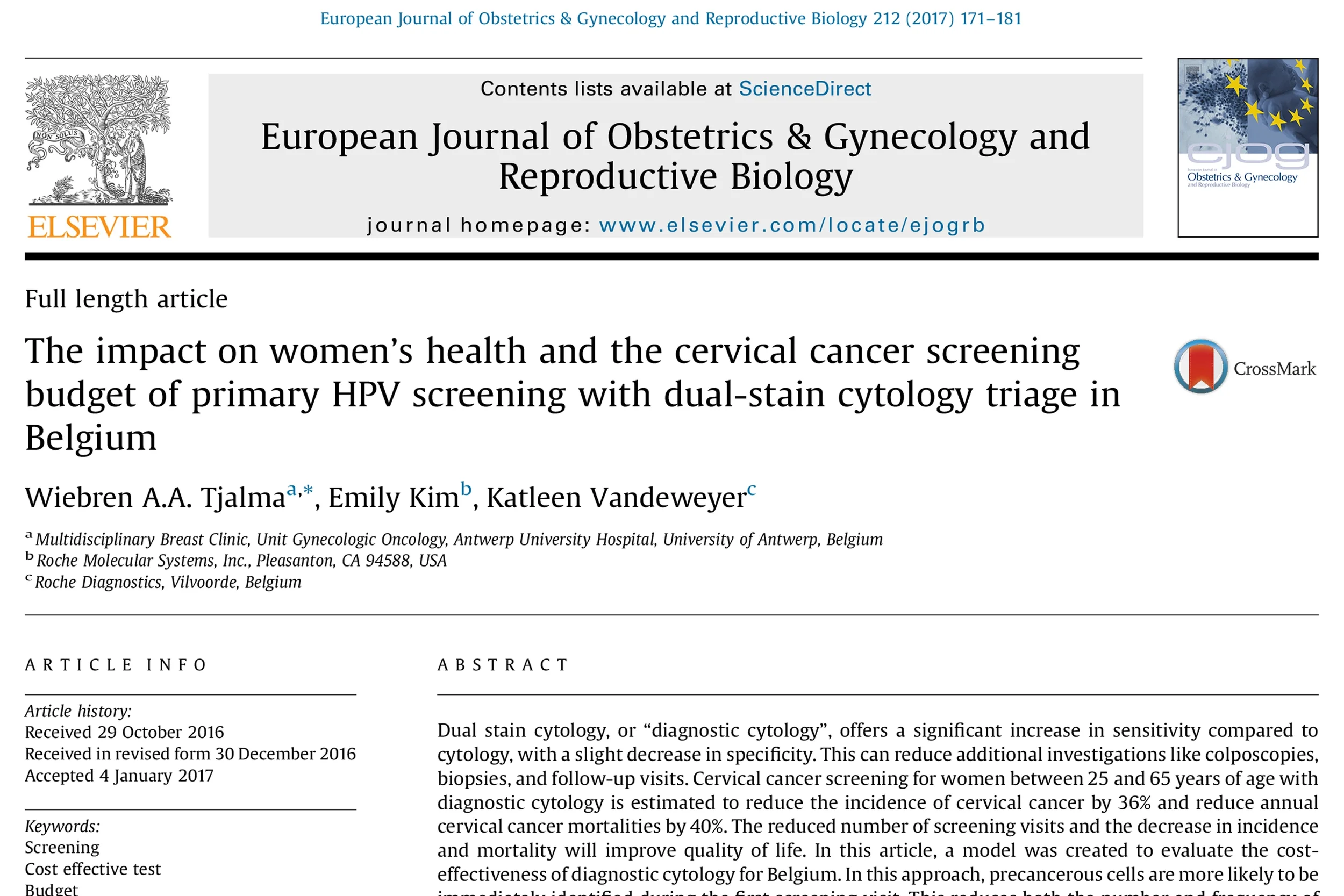
Cervical cancer remains one of the most preventable forms of cancer, yet it continues to affect thousands of women every year. Advances in vaccination and screening have significantly improved outcomes, but healthcare systems still face an important challenge: how can we detect disease earlier, reduce unnecessary follow-up procedures, and use healthcare resources more efficiently?
This publication explores how combining primary HPV screening with dual-stain cytology triage could transform cervical cancer prevention in Belgium.
Moving beyond traditional cytology.
For many years, cervical cancer screening has relied primarily on cytology (Pap testing). While effective, traditional cytology can miss certain precancerous abnormalities, resulting in delayed diagnosis and additional follow-up testing.
The study examined an alternative approach: using HPV testing as the first screening step, followed by dual-stain cytology to further assess women who test positive for high-risk HPV. This strategy aims to identify women at genuine risk more accurately and earlier in the screening process.
Earlier detection means better outcomes.
One of the most important findings was the significant improvement in detecting precancerous lesions and cervical cancer at an earlier stage.
Compared to traditional screening approaches, the model predicted:
Higher detection rates of clinically relevant disease.
Fewer missed precancerous abnormalities.
Earlier intervention and treatment.
Improved long-term health outcomes for women.
By identifying high-risk cases sooner, healthcare providers can intervene before disease progresses into invasive cervical cancer.
Reducing cervical cancer incidence and mortality.
The impact extends far beyond individual screening results.
For women aged 25–65, the model predicted:
A 36% reduction in cervical cancer incidence.
A 40% reduction in cervical cancer mortality.
These findings demonstrate how improvements in screening accuracy can translate into meaningful population-level health benefits and save lives over time.
Better care at a lower cost.
Healthcare innovation is often associated with increased spending. Interestingly, the opposite was observed in this analysis.
Although the proposed strategy introduces more advanced testing, earlier detection reduces the need for repeated follow-up procedures and helps prevent costly cancer treatments later on. Over time, the model projected:
Lower overall screening costs.
More efficient use of healthcare resources.
Annual savings of approximately €5 million for the Belgian healthcare system.
A reduction of more than 20% in the overall screening budget.
The study concluded that improved clinical outcomes and financial sustainability can go hand in hand.
A patient-centred approach to prevention.
Beyond the numbers, the publication highlights another important benefit: reducing uncertainty for patients.
More accurate screening means fewer ambiguous results, fewer unnecessary follow-up visits, and greater confidence that women who require further investigation are identified promptly. This not only improves clinical outcomes but can also reduce anxiety associated with cervical cancer screening.
Read the full publication.
Interested in the evidence behind next-generation cervical cancer screening strategies?