
Universal Access to Prenatal Screening: A Belgian Success Story
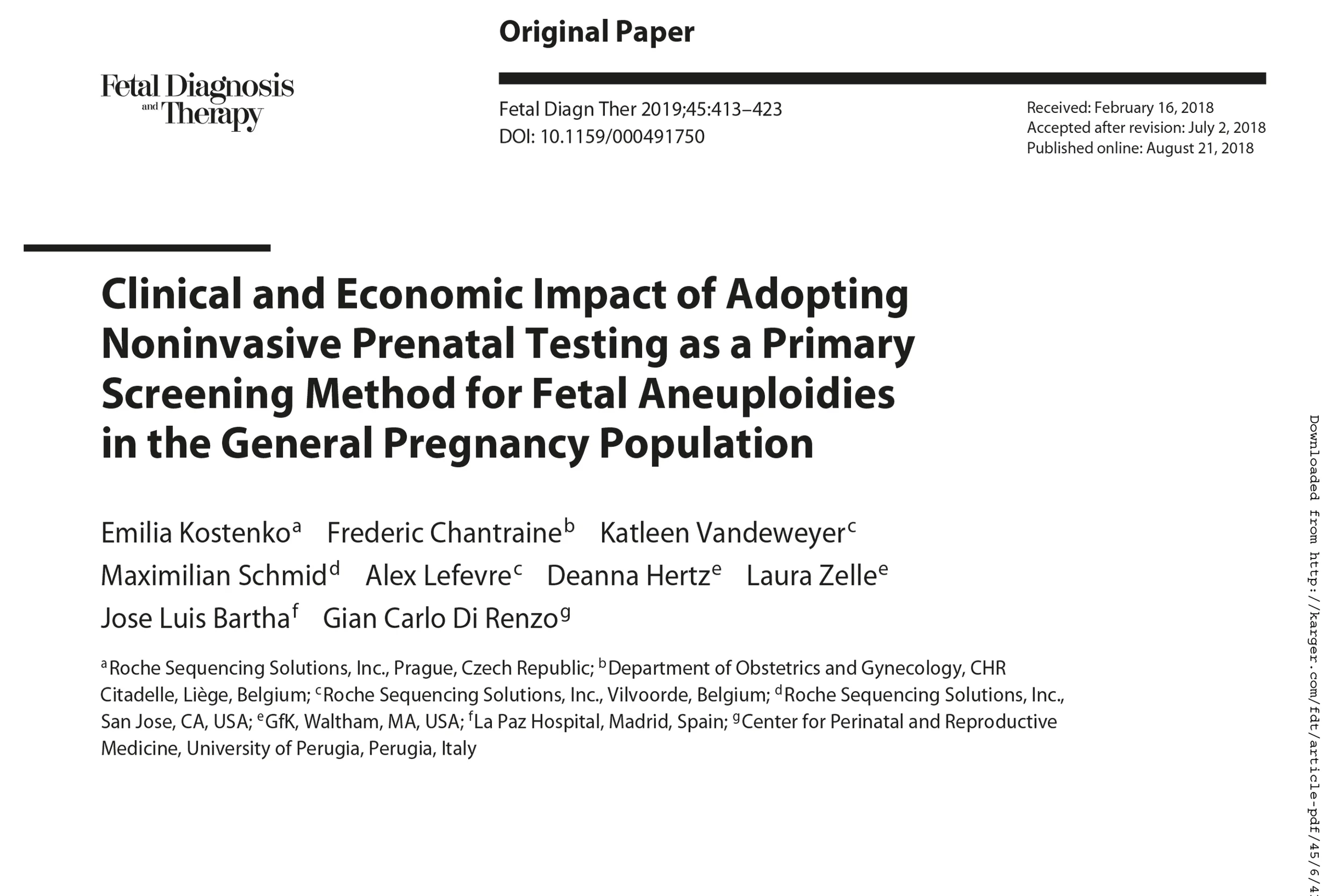
For decades, prenatal screening relied on a combination of ultrasound measurements, blood tests, and risk calculations. While these methods provided valuable information, they also came with limitations: missed diagnoses, false-positive results, and thousands of women being referred for invasive procedures that ultimately proved unnecessary.
This publication explores how Non-Invasive Prenatal Testing (NIPT) transformed prenatal screening and why Belgium became one of the first countries in the world to make this innovation broadly accessible.
The challenge with traditional screening.
Conventional screening methods can identify pregnancies at increased risk for chromosomal conditions such as Down syndrome (Trisomy 21), Edwards syndrome (Trisomy 18), and Patau syndrome (Trisomy 13). However, these approaches are not perfectly accurate and often generate false-positive results.
For many families, this leads to additional invasive procedures such as amniocentesis or chorionic villus sampling, which carry a small but real risk of miscarriage and other complications.
The question was clear: could healthcare systems improve outcomes while reducing unnecessary interventions?
Why NIPT changed the conversation.
NIPT analyses cell-free fetal DNA through a simple maternal blood sample and offers significantly higher accuracy than traditional screening methods. The study assessed what would happen if NIPT became the primary screening approach for all pregnant women rather than being reserved for high-risk cases.
The results were compelling:
Detection of trisomies increased significantly.
Unnecessary invasive procedures dropped by nearly 95%.
Procedure-related miscarriages were reduced by more than 90%.
More families received accurate information earlier in pregnancy.
Better outcomes for patients and healthcare systems.
Beyond the clinical benefits, the publication also examined the economic impact of large-scale implementation.
The analysis demonstrated that first-line NIPT could deliver substantially better outcomes while remaining economically viable for a publicly funded healthcare system. Importantly, the findings showed that healthcare innovation and cost-effectiveness do not have to be competing goals.
For policymakers, this provided strong evidence that broader access to advanced prenatal screening could improve both patient care and resource allocation.
A milestone in healthcare policy.
The publication reflects a broader shift toward value-based healthcare: combining scientific innovation, clinical evidence, and policy decision-making to improve outcomes at population level.
Belgium's decision to reimburse NIPT for all pregnant women became an internationally recognised example of how evidence can be translated into meaningful healthcare reform.
Read the full publication.
Interested in the data, methodology, and policy considerations behind one of Europe's most influential prenatal screening initiatives?