
Beyond Diagnosis: How Smarter Testing Can Improve Pregnancy Care
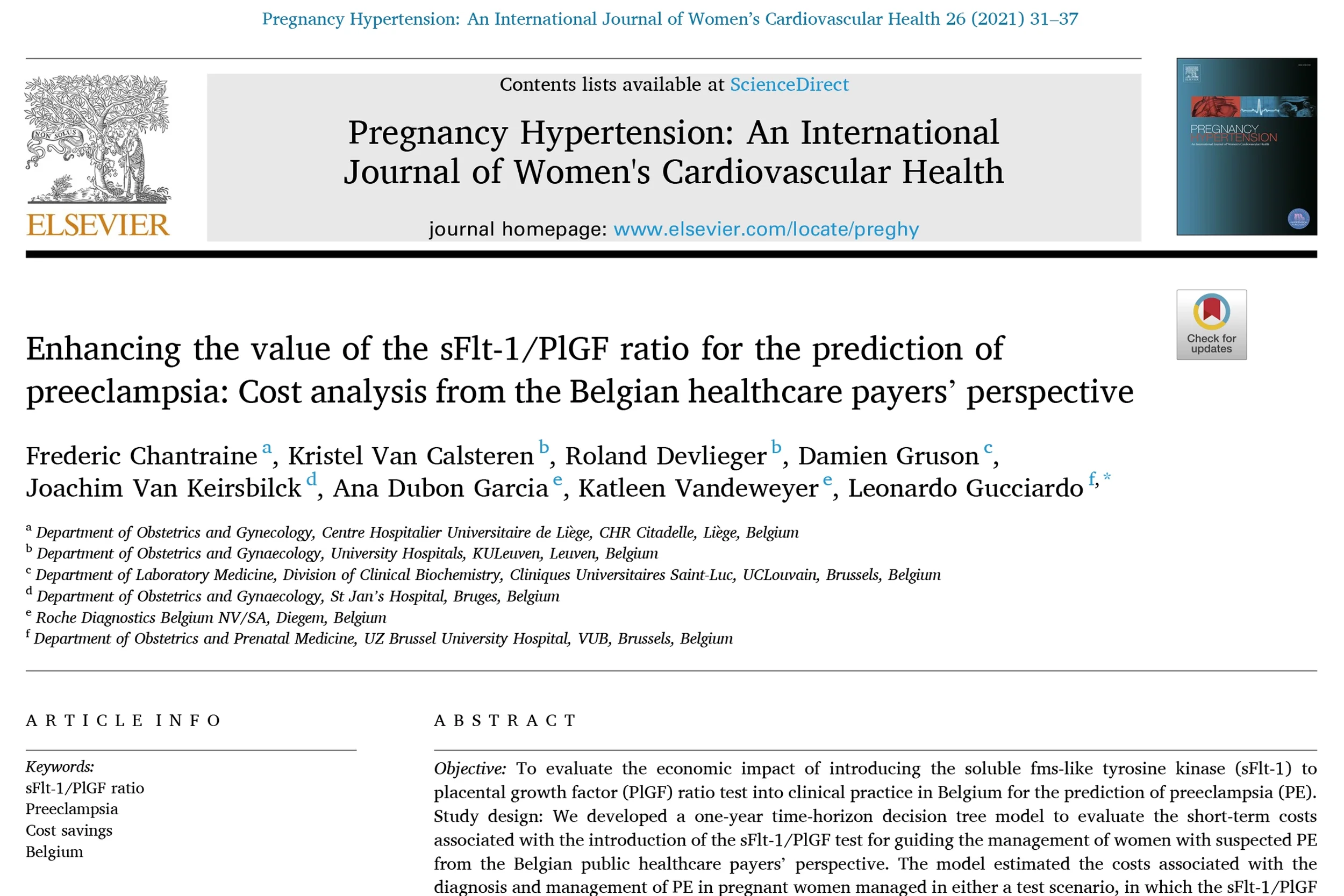
Preeclampsia is one of the most serious complications in pregnancy. Yet diagnosing it isn't always straightforward. Symptoms can be vague, overlap with other conditions, or appear before the disease is fully developed. As a result, many women are hospitalized as a precaution while clinicians monitor whether preeclampsia will actually occur.
While this cautious approach is understandable, it can create significant stress for expectant mothers and substantial costs for healthcare systems.
A more accurate way to assess risk.
This publication examines the impact of using the sFlt-1/PlGF ratio test, a biomarker-based test that helps clinicians assess the likelihood of preeclampsia developing in the short term. Rather than relying solely on clinical symptoms and observations, healthcare professionals gain additional objective information to guide decision-making.
The study evaluated whether introducing this test into Belgian clinical practice could improve patient management while also reducing unnecessary healthcare spending.
Fewer unnecessary hospitalisations.
One of the most striking findings was the reduction in precautionary hospital admissions. Without the test, more than one in three women with suspected preeclampsia were hospitalized. With the additional information provided by the sFlt-1/PlGF ratio, that number could be significantly reduced while still ensuring that women at genuine risk receive appropriate care.
This means healthcare resources can be focused where they are needed most, while many women avoid unnecessary hospital stays and uncertainty.
Better outcomes, lower costs.
The analysis showed that introducing the test could generate an estimated cost saving of €712 per patient in Belgium. These savings were largely driven by avoiding unnecessary hospitalizations and improving the allocation of care.
On a national scale, the study suggests that widespread implementation could translate into millions of euros in healthcare savings each year, while maintaining high-quality care for pregnant women.
Creating value through innovation.
The broader message of this publication extends beyond diagnostics alone. It demonstrates how evidence-based innovation can improve patient care, support clinical decision-making, and help healthcare systems use resources more effectively.
For policymakers, healthcare leaders, and clinicians alike, it offers an example of how better data can lead to better decisions.
Read the full publication.
Interested in the methodology, economic modelling, and detailed findings behind this research?