
Earlier Detection, Better Outcomes: Rethinking Pre-Eclampsia Screening
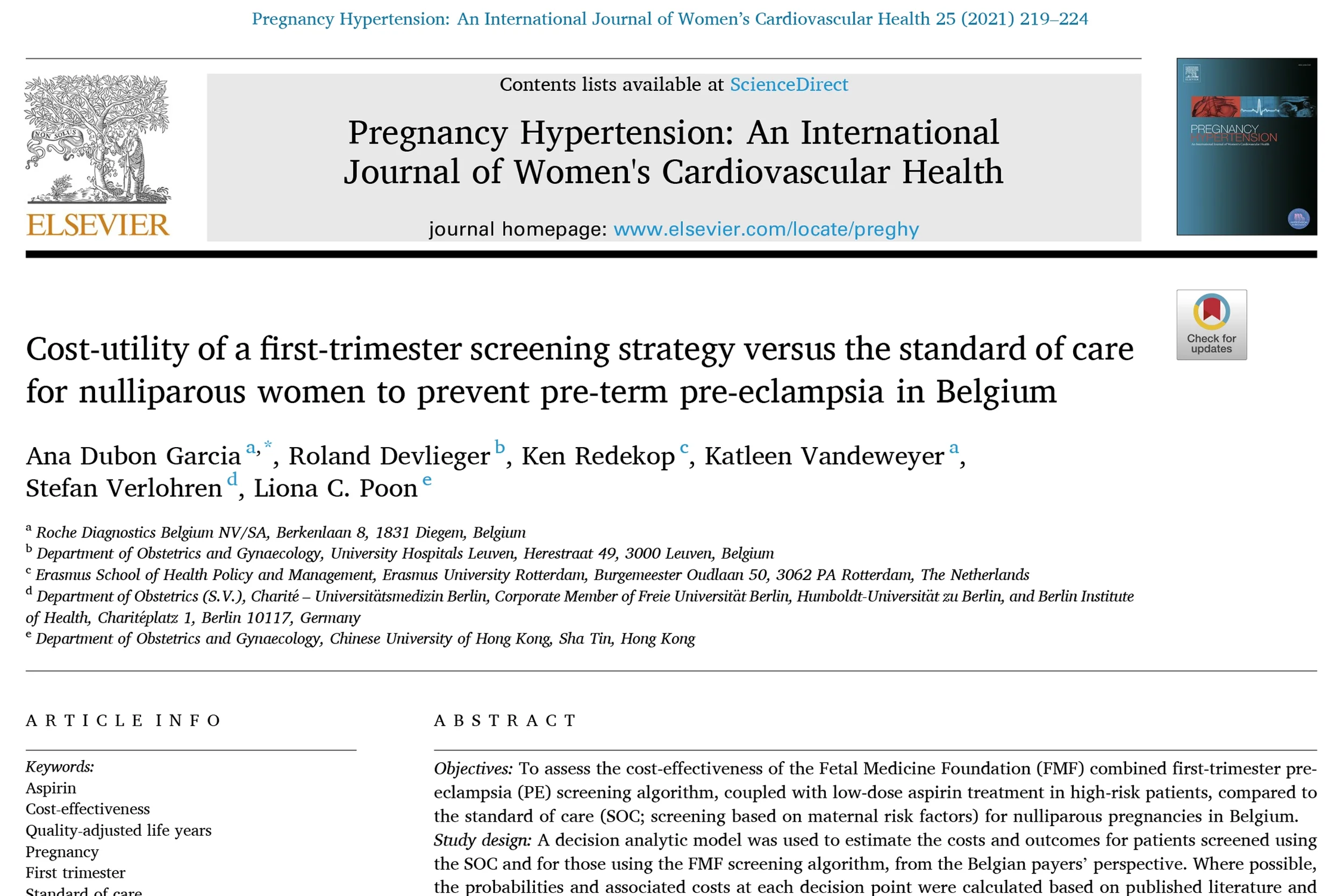
Pre-eclampsia remains one of the leading causes of complications during pregnancy, affecting thousands of women worldwide each year. Early identification of high-risk pregnancies can make a significant difference, but traditional screening methods often fail to detect many cases in time.
In this publication, Katleen Vandeweyer and co-authors evaluated a first-trimester screening approach that combines clinical risk factors with advanced biomarkers to identify women at higher risk of developing pre-term pre-eclampsia. The study compared this approach to the standard screening methods currently used in Belgium.
The Challenge: Identifying Risk Early.
Traditional screening methods primarily rely on maternal risk factors to identify women at risk of developing pre-term pre-eclampsia. However, these approaches can miss a significant number of cases, limiting opportunities for timely prevention.
The study evaluated a more comprehensive screening model that combines clinical risk factors with biochemical and biophysical markers during the first trimester of pregnancy.
What the Research Found.
The results demonstrated that the enhanced screening strategy could significantly improve early detection and prevention of pre-term pre-eclampsia.
According to the analysis, implementing this approach across Belgium could prevent an estimated 337 additional cases of pre-term pre-eclampsia every year. The model also showed a reduction in healthcare costs compared to the standard screening approach.
The lesson healthcare rarely teaches.
Coming from a family of doctors, specialists and scientists, I grew up surrounded by brilliant people. People who invested deeply in their knowledge and expertise. What I noticed over time is that far fewer people are encouraged to invest in themselves with the same intensity. Not because they lack ambition. Not because they lack capability. Simply because nobody tells them that self-awareness, reflection and personal growth are also part of becoming exceptional.
That realisation stayed with me.
Why this matters.
The benefits extended beyond cost savings alone. By identifying high-risk pregnancies earlier and enabling targeted preventative treatment, the screening strategy was associated with fewer complications, fewer neonatal intensive care admissions and improved outcomes for both mothers and babies.
The findings reinforce an important principle in healthcare: earlier intervention often leads to better outcomes, both clinically and economically.
Looking ahead.
As healthcare systems continue to focus on prevention and value-based care, evidence-based screening programmes have the potential to improve patient outcomes while making healthcare resources more effective.
This research contributes to the growing body of evidence supporting more personalised approaches to maternal healthcare and preventative medicine.
Read the full publication.
Interested in the complete methodology, data and scientific findings?
Access the full publication to explore the research in greater detail.